Leap API
GPT Image 2 APIOpenAI's model, through Leap
OpenAI's image model: precise prompt following and text, at medium quality. One Leap key and one balance run it and every other model, priced per call in dollars.
- One key for every model
- Every call quoted first
- A failed call costs nothing
curl https://api.tryleap.ai/v1/generations \ -H "x-api-key: $LEAP_API_KEY" \ -H "content-type: application/json" \ -H "prefer: wait=60" \ -d '{ "model": "openai/gpt-image-2", "input": { "prompt": "A silk scarf in the wind on a ferry deck", "aspect_ratio": "1:1" } }' # Video often outlasts the wait and answers "queued" or "running".# Put its "id" in GENERATION_ID and read it again until it is done:# curl https://api.tryleap.ai/v1/generations/$GENERATION_ID -H "x-api-key: $LEAP_API_KEY"Set LEAP_API_KEY and send it. With prefer: wait=60 the answer holds the result when the call finishes within a minute; a longer one is read again by its ID.
- Model ID
- openai/gpt-image-2
- Price per call
- $0.056276 to $0.068948
- This call
- A 1:1 image costs $0.068948.
- Free to start
- The $2 welcome credit covers 29 calls like it.
What it makes
Made with GPT Image 2
Real GPT Image 2 runs on Leap. Each one passed Leap's media quality check before it was shown.
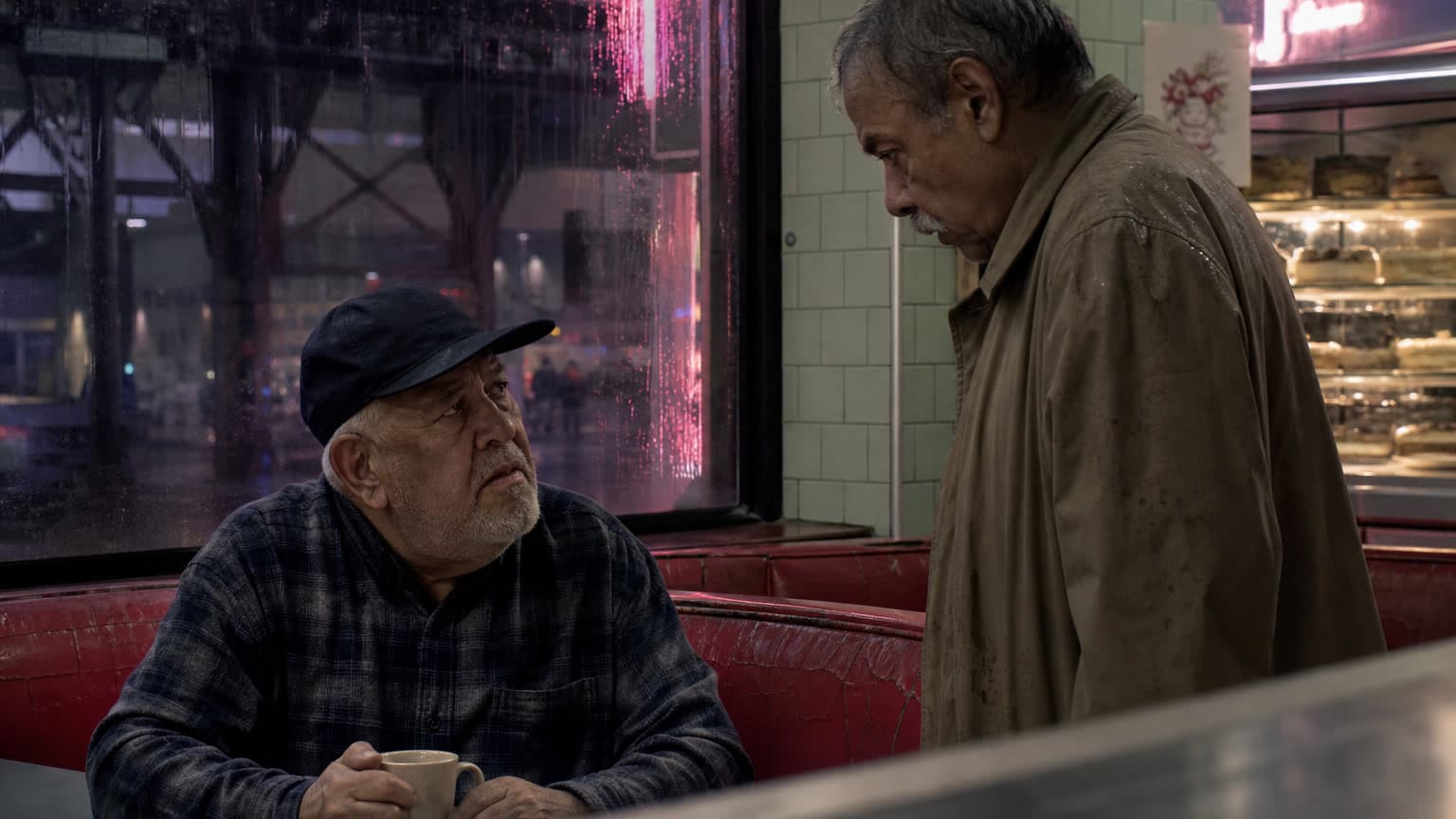
“Film still from an independent drama, Kodak 5219 grain. 4 a.m. in a 24-hour diner on Roosevelt Avenue in Jackson Heights, Queens; rain streaks the big front window and the steel of the elevated train blurs outside under pink neon. In a cracked red vinyl booth sits a heavy-set Puerto Rican man in his early seventies, white stubble, deep creases, a faded navy flannel shirt buttoned to the top, a plain navy cap, both hands around a chipped white coffee mug, looking up with hurt and suspicion. Standing at the end of the table, just arrived, is his younger brother in his sixties, thin and stooped, grey moustache, a soaked tan raincoat dripping, eyes lowered. Light: cold overhead fluorescent and warm pink neon spill through the window, a mint-green tiled wall, a glowing pie case behind. Over-the-shoulder two-shot from the counter side, 50mm, f/2.8. Palette: booth red, mint green, neon pink. Real faces: liver spots, pores, wet hair. No readable text.”
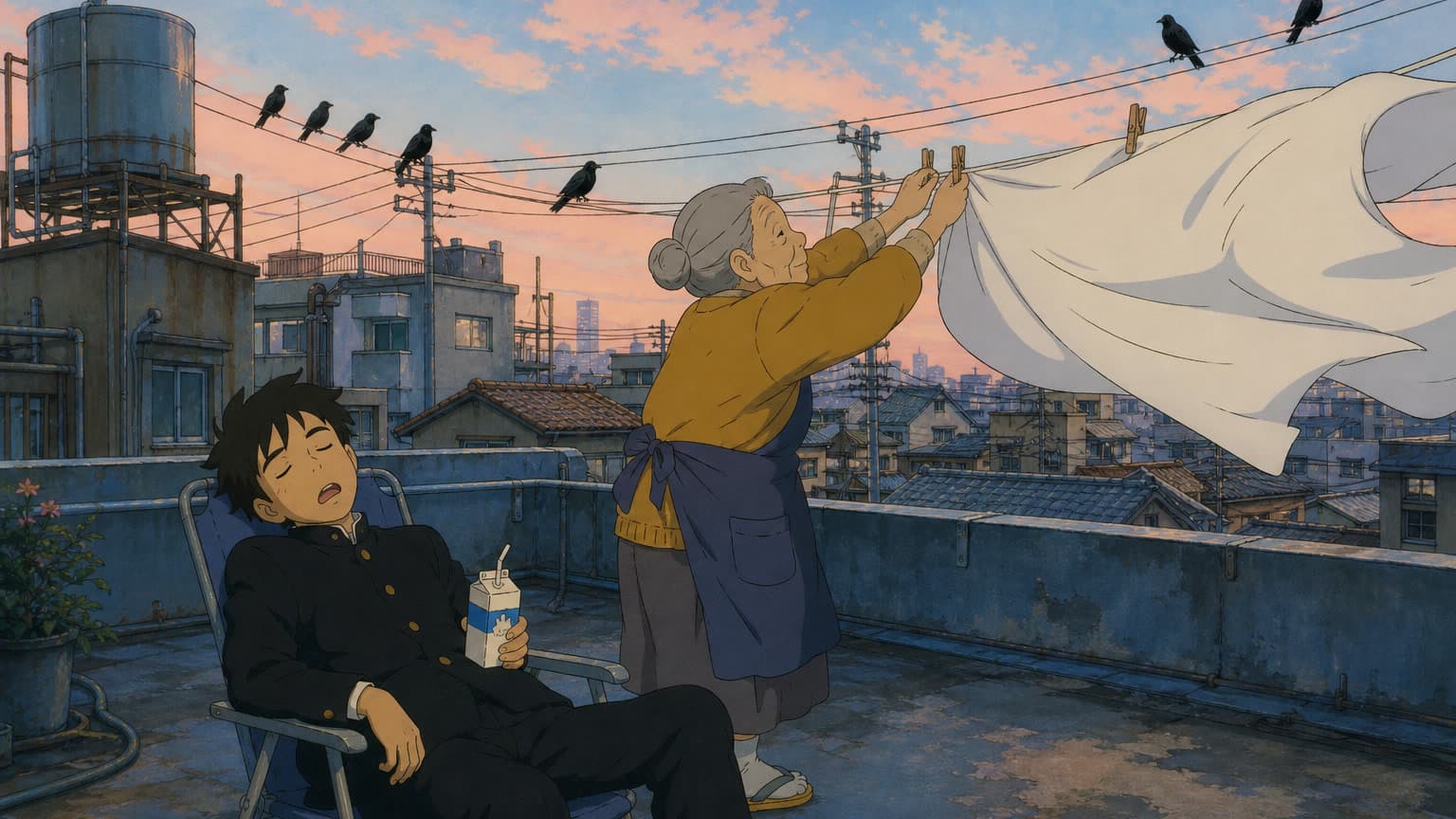
“A frame from a hand-drawn Japanese animated feature film with a 1990s cel animation look: hand-inked line art, flat cel shading on the characters, a lush painted gouache background. Dawn on the flat rooftop of a small three-storey apartment building in an old Osaka neighbourhood, a tangle of power lines, water tanks and a view over tiled roofs. A small 72-year-old grandmother with a bent back, grey hair in a bun, a faded indigo apron over a mustard cardigan, pins a big white bedsheet onto a laundry line with wooden pegs, the sheet billowing in the wind. Her gangly teenage grandson in a black high-collared school jacket sleeps slumped in a plastic folding chair beside her, mouth open, a milk carton in his hand. Crows on the power lines. A peach and powder-blue sky with a pale moon. Palette: peach, powder blue, indigo, mustard. Gentle slice-of-life mood. No text.”
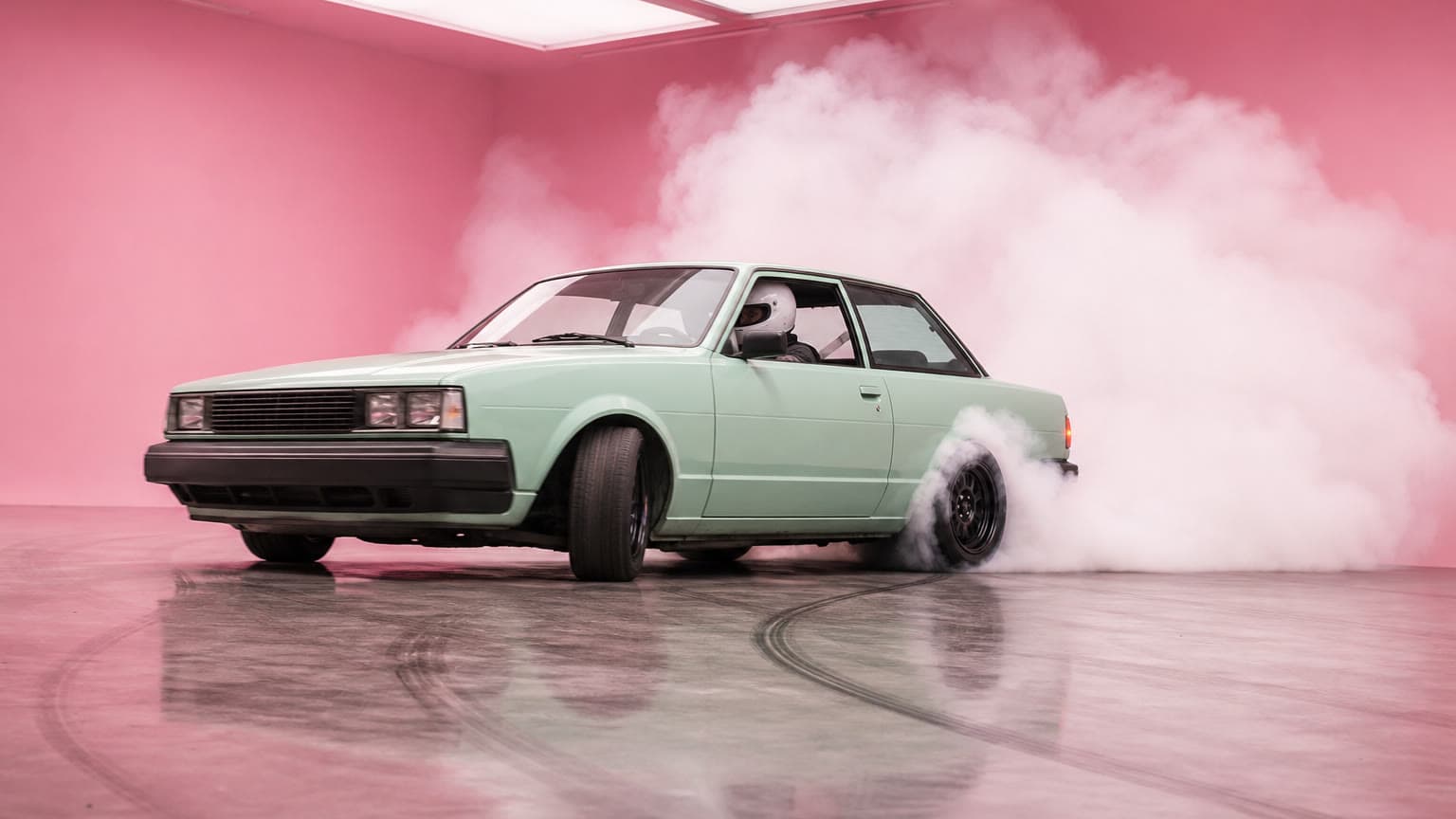
“Car commercial frame, wide 24mm lens from just above a polished concrete floor. A vast seamless pastel-pink cyclorama studio stage lit by huge soft overhead panels. An invented boxy 1980s two-door rear-wheel-drive coupe in pale mint green with black steel wheels slides sideways mid-drift across the frame, front wheels on full opposite lock, rear tyres pouring thick white smoke that billows up and fills half the stage; black rubber marks curve across the floor; a driver in a white helmet is barely visible through the side window. Palette: bubblegum pink, mint, white smoke. Crisp commercial light, real smoke texture, slight motion blur on the wheels. No badges, no number plate. No readable text, no logos.”
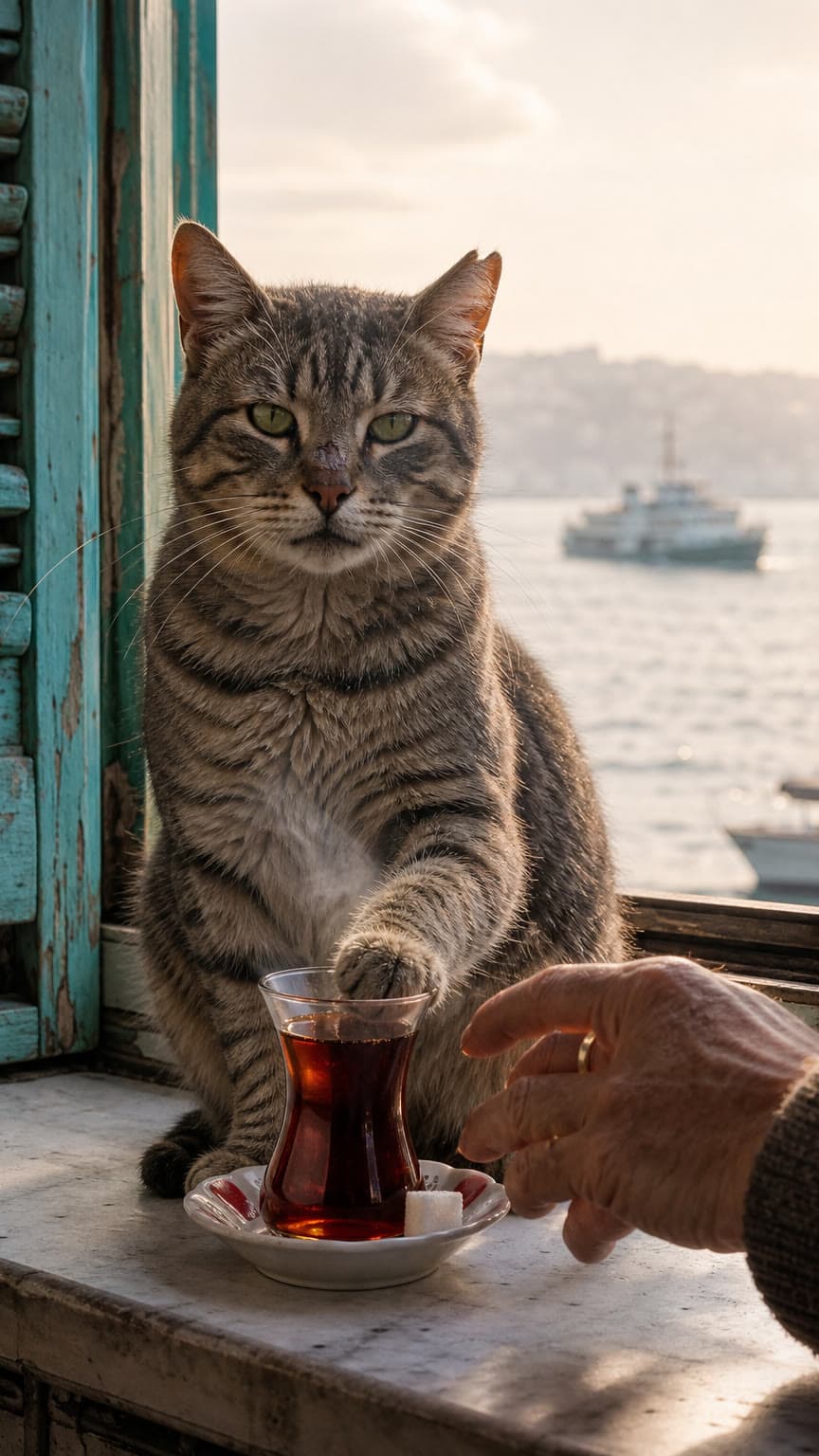
“Vertical photograph at windowsill level, 50mm lens, late afternoon sun. An old apartment in Kadıköy, Istanbul: a wide marble windowsill, faded turquoise wooden shutters open, the Bosphorus and a ferry hazy in the distance. A large grey tabby street cat with a torn left ear and a scarred nose sits on the sill staring deadpan straight into the lens, one front paw resting against a full tulip-shaped glass of dark red tea on a small saucer near the edge, a sugar cube beside it. At the edge of frame an older man's hand in a brown cardigan cuff with a gold wedding ring reaches toward the glass. Palette: tea amber, tabby grey, turquoise. Real fur, dust in the sunbeam, steam from the tea. No readable text, no logos.”
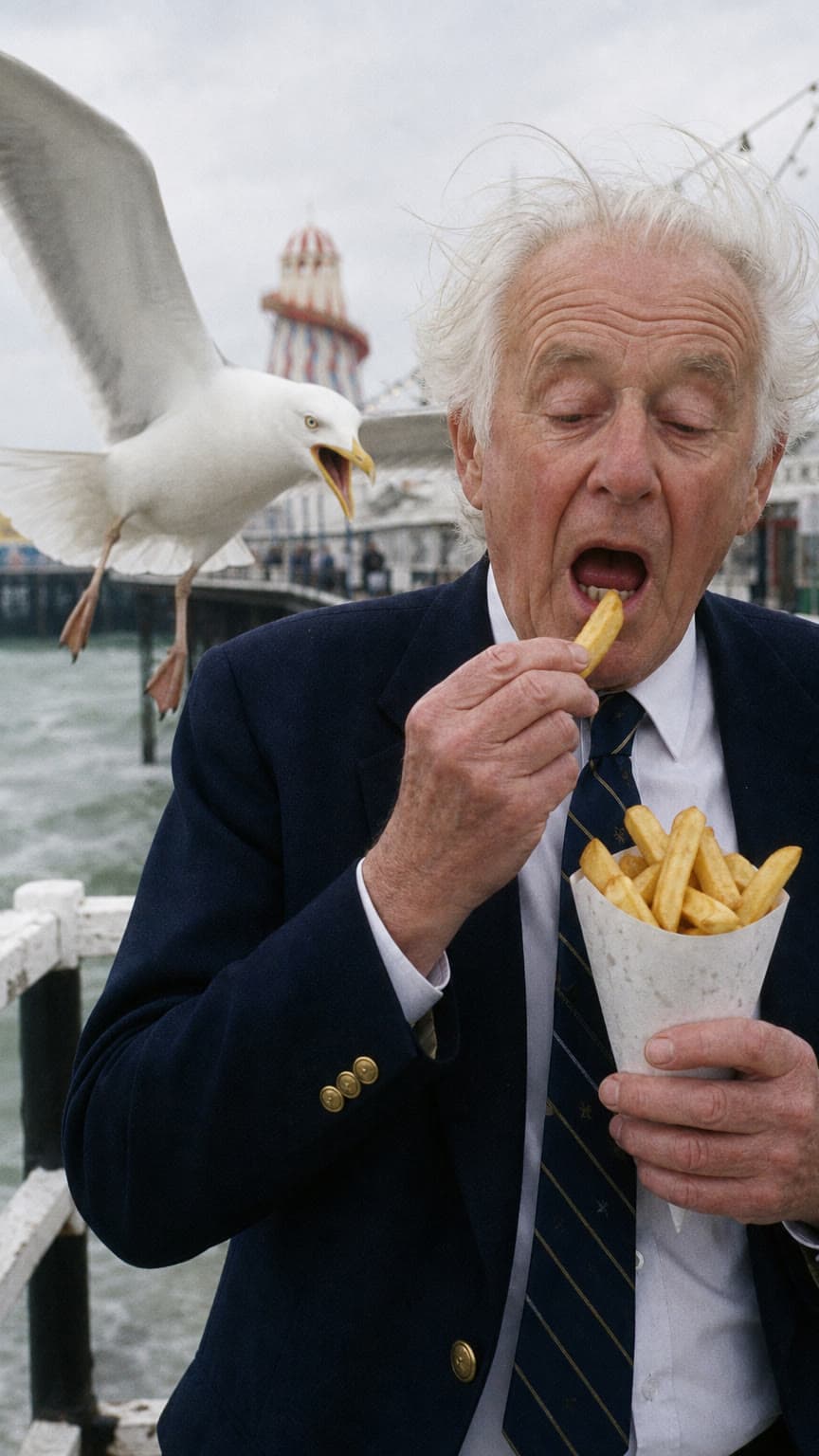
“Vertical candid street photograph, 35mm lens, windy afternoon with bright overcast light. Brighton Palace Pier, England: white railings, a grey-green choppy sea, strings of bulbs and a helter-skelter blurred behind. A 74-year-old Englishman, tall and stooped, thin white hair whipped by the wind, a navy blazer with brass buttons and a striped tie, holds a paper cone of fat chips and lifts one chip toward his open mouth, eyes half shut in anticipation. Just behind his shoulder a large herring gull swoops in low, wings spread, beak open, eyeing the chip. Palette: navy, chip gold, gull white, sea grey-green. Real wind, salt spray, grain. No readable text, no logos.”
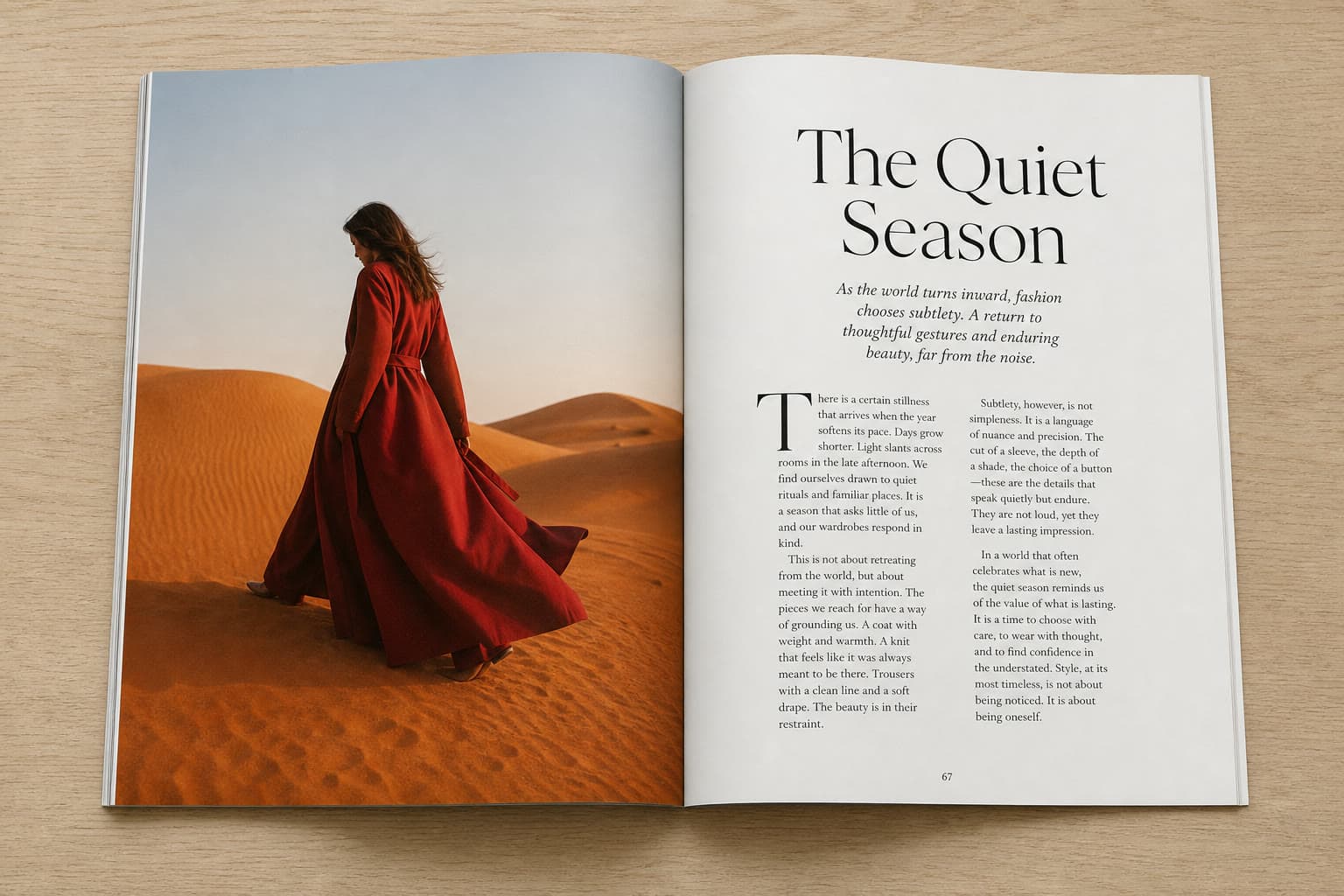
“An open luxury fashion magazine lying flat on a pale oak table, photographed from above in soft daylight. The left page is a full-bleed photograph of a model in a flowing crimson coat walking across orange desert dunes, with no caption. The right page has generous white space, a large elegant serif headline reading "The Quiet Season", a short italic standfirst, and a drop cap starting two neat columns of body text, and a page number. No brand names, no photo credits, no prices, no bylines, no dates. Real paper texture, gentle page curl at the gutter, editorial art direction”
Inputs
What GPT Image 2 takes
Only prompt is needed; everything else has a default. The same schema is public, with no key, at api.tryleap.ai/v1/public/models/openai/gpt-image-2.
MCP
Or let your agent call it.
Leap's MCP server lets Claude Code, Claude, VS Code and other MCP clients run GPT Image 2, read its inputs and fetch the result, on your balance. Signing in happens in the browser, so there is no key to paste.
claude mcp add --transport http leap https://app.tryleap.ai/api/mcpClaude Code signs you in through the browser the first time it calls Leap.
curl -fsSL https://www.tryleap.ai/install.sh | shInstalls the Leap skill for every coding agent it finds: which endpoint to call, how to read a model's inputs, when to wait and when to poll.
Questions
GPT Image 2 API questions
- How much does the GPT Image 2 API cost?
- A 1:1 image costs $0.068948. By shape, a call costs $0.056276 to $0.068948. That is the provider's list price plus 10%, the same as in the studio. POST /v1/quotes prices any input for free before you run it.
- Can I try the GPT Image 2 API for free?
- Yes. Sign up with a Gmail, Outlook or work address and your workspace starts with $2 of credit, no card needed. A 1:1 image costs $0.068948. The $2 welcome credit covers 29 default calls.
- Do I pay for calls that fail?
- No. The price is held when a call starts and charged only if it succeeds. A call that fails, or that the model's safety filter refuses, comes back with status "failed" and a failure_cause, and the hold is released.
- Is this OpenAI's own API?
- No. Leap is a separate service: it sends your call to OpenAI's model and gives you what it makes, so you need no OpenAI account. One Leap key runs GPT Image 2 and every other model in the catalog, from one balance.
- What are the rate limits?
- 600 requests a minute per API key and 300 a minute per IP address. A batch starts up to 50 calls in one request. A 429 says how long to wait in its Retry-After header.
- Can an AI agent call it?
- Yes. Leap's MCP server lets Claude Code, Claude, VS Code and other MCP clients find GPT Image 2, read its inputs, run it and fetch the result on your balance. The client signs you in through the browser, so there is no key to paste.
Build with GPT Image 2.
Start with $2 of credit, no card. The same key runs every model on Leap.
Get an API key